Synopsis: Once just a favourite holiday spot, Thailand is fast becoming a serious relocation choice for Indian families. A short flight, a lower cost of living, world-class private hospitals, international schools, familiar food and temples, and a growing set of long-stay visas are all part of the draw. This blog explains why families are making the move, what it really costs, what the visa picture looks like for Indians in 2026, and what to weigh honestly before you pack, including air quality and fast-changing rules.
At a Glance
| Flight time from Delhi | About 4 hours to Bangkok |
|---|---|
| Time difference | Roughly 1.5 hours ahead of India |
| Comfortable monthly budget (single) | About 50,000–80,000 baht (around $1,400–2,300) |
| Inflation (September 2026) | 2.82% headline, per the Commerce Ministry |
| Visa-free entry for Indians | 30 days, with an optional 30-day extension, since 15 September 2026 |
| Longer-stay options | DTV, retirement visas (age 50+), tourist visas and LTR |
| Biggest watch-out | Seasonal air pollution, especially in the north (February–April) |
From Holiday Destination to Home
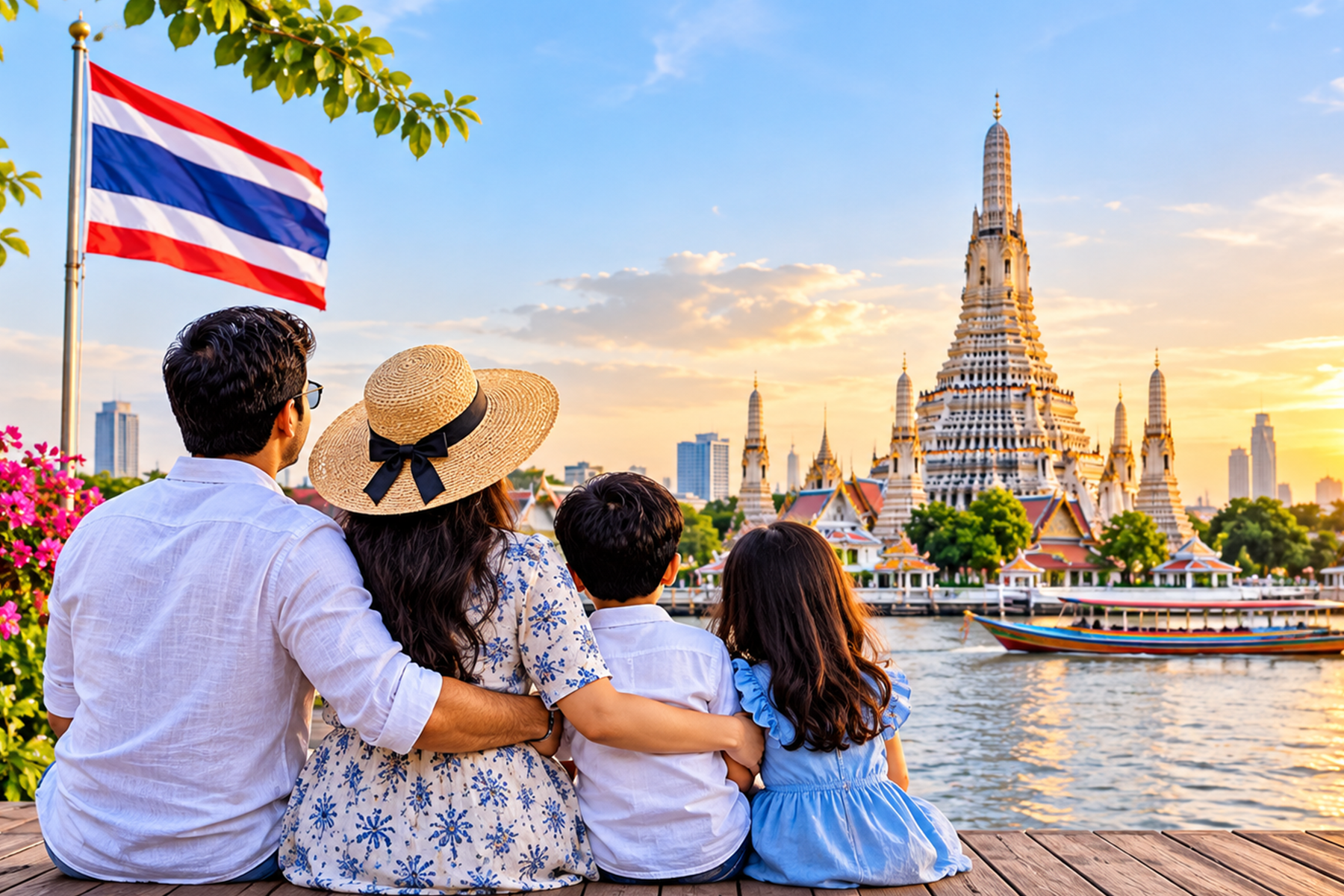
For years, Thailand meant a quick trip to Bangkok, Phuket or Pattaya. Today, more Indian families are asking a different question: could we live here? India sends more tourists to Thailand than almost any other country, and many of those visitors return home with the same thought. The country feels easy, welcoming and surprisingly familiar. For families who want a better lifestyle without moving halfway across the world, that combination is hard to ignore.
Seven Reasons Indian Families Are Making the Move
1. It Is Close to Home
A flight of about four hours means grandparents, relatives and business back in India are never far. A weekend trip home is realistic, and the time difference is only about an hour and a half, so family calls and work meetings with India stay easy. Compare that with the 8–16 hour flights to Europe, North America or Australia.
2. Your Money Goes Further
Thailand offers a high standard of living at a moderate price. A modern condo with a pool and gym, domestic help, eating out and private healthcare cost far less than in most Western countries. Rent for a modern one-bedroom ranges from around 9,000–16,000 baht in Chiang Mai to 18,000–30,000 baht or more in central Bangkok. Prices have stayed relatively stable: inflation was negative for much of the past year and stood at 2.82% in September 2026.
3. Healthcare You Can Trust
Bangkok, Chiang Mai, Phuket and Hua Hin have modern private hospitals with English-speaking staff, international accreditation and shorter waits than many families are used to. Costs are well below those in the West. Good health insurance is essential, and it is mandatory for several of the long-stay visas.
4. International Schools and a Safe Environment
Bangkok and Chiang Mai in particular have a strong choice of international schools following British, American and IB curricula. Many Indian parents also value the sense of everyday safety and the respectful, family-oriented culture.
5. Food, Faith and Community That Feel Familiar
Indian restaurants, groceries and vegetarian options are easy to find in the big cities. There are long-established Indian communities, Hindu temples and festival celebrations such as Diwali and Navratri, and Thailand's deep Buddhist and Hindu cultural threads make it feel less foreign than many destinations. Families rarely have to compromise on what they eat or how they celebrate.
6. A Lifestyle Upgrade
Beaches, islands, mountains, spas, golf, wellness retreats and a relaxed pace of life are on your doorstep. For professionals and entrepreneurs, fast internet, co-working spaces and a growing remote-work community make it practical to earn in one country and live in another.
7. Flexible Visa Routes
Thailand now offers several ways to stay longer, which makes relocating more practical than a simple holiday visit.
The Visa Picture for Indians in 2026
The rules have changed more than once this year, so check the latest guidance before travelling.
- Visa-free entry: Since 15 September 2026, Indian passport holders can enter Thailand for up to 30 days without a visa, with an optional 30-day extension. The earlier 60-day exemption has ended.
- Tourist e-visa: Allows a longer initial stay and is applied for online before travel.
- Destination Thailand Visa (DTV): Aimed at remote workers, freelancers and people on qualifying activities, with up to 180 days per entry. It must be applied for from outside Thailand, and it requires proof of savings or a qualifying activity.
- Retirement visas (age 50+): The Non-Immigrant O, O-A and O-X routes require roughly 800,000 baht in a Thai bank, or about 65,000 baht in monthly income, with higher thresholds and mandatory insurance for some routes. These are non-working visas.
Important: Visa rules, fees and eligibility can change quickly. Always confirm with the Royal Thai Embassy in New Delhi or a licensed Thai immigration lawyer before you commit.
Which City Suits Which Family?
| City | Best for | Keep in mind |
|---|---|---|
| Bangkok | Career, international schools, top hospitals and a large Indian community | Higher rents, traffic and cooler-season smog |
| Chiang Mai | Lower costs, culture, a relaxed pace, families and retirees | Heavy pollution from roughly February to April |
| Hua Hin | Quiet beach living, retirees and access to Bangkok | Pricier than Chiang Mai, busy weekends |
| Phuket | Cleaner air, beaches and lifestyle seekers | Most expensive and car-dependent |
The Honest Downsides
A good decision means looking at the full picture:
- Air quality: Thailand's annual PM2.5 in 2025 was about 3.6 times the WHO guideline. Chiang Mai has had severe smog episodes, with the index above 150 in April 2026, so many residents spend the spring in the south. Bangkok's worst air tends to arrive between November and February.
- Climate: Hot and humid for much of the year, with heavy rain from roughly June to October.
- Rules and paperwork: Visa policies shift, long-stay visas need proof of funds and insurance, and foreigners generally cannot own land. Taxation of foreign income is also changing, so take professional advice.
- Language and bureaucracy: English works well in expat areas but less so in government offices.
How to Make the Move Smoothly
- Visit before you decide. Spend a few weeks in each city you are considering, ideally in the season you worry about most.
- Rent first, buy later. Short-term rentals let you test neighbourhoods, schools and commutes before a long lease or purchase.
- Sort the visa early. Pick the route that matches your income, age and plans, and keep your documents ready.
- Budget for insurance. Health cover is a major recurring cost, especially for older family members.
- Get tax and legal advice. Speak to advisers in both India and Thailand about residency, remittances and foreign income.
Final Thoughts
Thailand will not be right for everyone, but its appeal for Indian families is real: close to home, easier on the wallet, strong on healthcare and schools, and comfortable for Indian food and culture. Go in with clear eyes about the air quality and shifting visa rules, and plan carefully. For many families, the result is a better balance of cost, comfort and quality of life.
Disclaimer: This blog is general information, not legal, tax, medical or financial advice. Costs, visa rules and air quality data change often, so verify current details with official sources before making decisions.