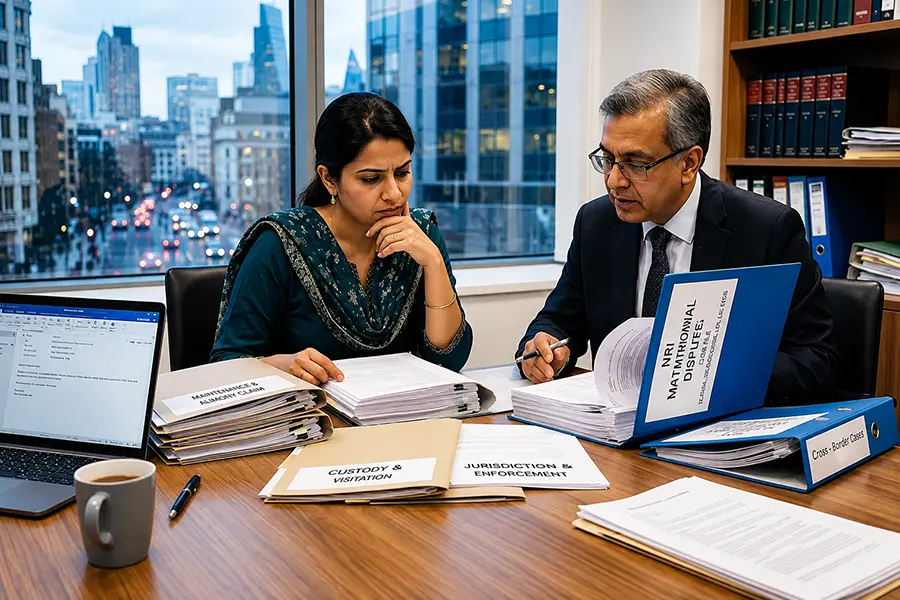
An overseas marriage often begins with hopes of love, financial stability and a brighter future. For many couples and families, these hopes become reality. However, when important details remain unverified or expectations are not discussed openly, distance can make relationship challenges more difficult to resolve.
For a spouse living abroad without family support, financial independence or a clear understanding of local laws, marital conflict can become an isolating experience. Awareness, preparation and access to reliable support can make a meaningful difference.
1. The Promise and the Reality of NRI Marriages
NRI marriages can bring together different cultures, opportunities and family traditions. Yet, when a relationship involves different countries, it may also involve unfamiliar legal systems, immigration requirements and practical challenges.
Problems can arise when information about employment, income, immigration status or previous marriages is misrepresented. In other situations, one spouse may be left in India while waiting for promised visa arrangements, or may face difficulties after relocating abroad.
Recognising these risks does not mean viewing every overseas marriage with suspicion. It means making informed decisions before committing to a life together.
2. Where Problems Begin
Several concerns may arise in cross-border matrimonial relationships:
- Misrepresentation: Incorrect or incomplete information about employment, income, immigration status or previous marriages.
- Abandonment: A spouse left in India awaiting promised arrangements, or stranded after relocating abroad.
- Harassment and abuse: Dowry demands, humiliation, violence, financial control or withholding personal documents.
- Immigration dependence: Fear about visa status or residency rights that may make seeking assistance more difficult.
- Conflicting expectations: Disagreements over careers, finances, children, living arrangements and family responsibilities.
- Cross-border disputes: Divorce, maintenance and child custody matters involving different legal systems.
Not every marital breakdown involves misconduct. Each situation should be assessed fairly, with appropriate protection for anyone experiencing abuse and a fair opportunity for both parties to be heard.
3. Before Marriage: Verify, Discuss and Prepare
Practical preparation can help couples and families make better-informed decisions.
- Verify essential information: Independently check identity, marital history, employment details and relevant immigration documents.
- Discuss expectations openly: Talk about finances, living arrangements, career plans, children, family responsibilities and long-term goals.
- Understand documentation requirements: Complete applicable marriage-registration formalities and retain secure copies of passports, visas and the marriage certificate.
- Understand immigration conditions: Learn about the proposed visa category, applicable conditions and sources of support in the destination country.
- Build a support network: Identify trusted contacts, relevant community resources and qualified professionals.
Verification is a sensible precaution—not a sign of disrespect.
4. When Things Go Wrong: Know Your Options
When a matrimonial dispute arises, safety and informed decision-making should come first.
- Prioritise personal safety: Anyone facing immediate danger should contact emergency services in the country where they are located and seek appropriate local support.
- Preserve relevant records: Keep messages, financial records, travel details, official communications and other relevant evidence safely, where lawful and appropriate.
- Seek qualified legal advice: Depending on the circumstances, available remedies may involve protection from abuse, maintenance, divorce or child custody proceedings.
- Understand cross-border implications: Proceedings in one country may raise questions about jurisdiction, applicable law or recognition and enforcement of orders in another.
- Contact appropriate support services: Indian embassies and consulates may help identify relevant assistance for Indian nationals abroad, subject to their role and available services.
- Respond to court notices promptly: Do not assume that proceedings in one country automatically resolve every related issue elsewhere.
Where appropriate and safe, mediation may help parties explore a resolution. It may not be suitable in every situation, particularly where coercion or abuse is involved. Any settlement should be reviewed for its legal effect and enforceability.
5. The Emotional and Family Impact
The consequences of a troubled NRI marriage often extend beyond legal proceedings. A person living far from family may experience loneliness, uncertainty, financial pressure and difficulty accessing trusted assistance.
Parents and relatives may also struggle to understand what is happening, especially when information is incomplete or communication is limited by distance.
Listening without blame, respecting the affected person's decisions and helping them access appropriate professional support can be more constructive than applying pressure to remain silent or make an immediate decision. Support should focus on safety, dignity and informed choices—not assumptions about either spouse.
6. How MOOV INC ADVISORY Can Help
MOOV INC ADVISORY provides India-based advisory and coordination support for NRIs and overseas families dealing with India-related matrimonial and family matters.
- Organising and coordinating relevant documentation.
- Facilitating consultations with qualified advocates.
- Helping coordinate India-based follow-up and communication.
- Assisting families with practical on-ground coordination for India-related matters.
Legal advice and representation are provided by qualified advocates. Matters involving foreign courts, immigration rules or overseas legal proceedings require advice from appropriately qualified professionals in the relevant jurisdiction.
7. The Way Forward: Awareness, Dignity and Support
An overseas marriage should be approached with hope, but also with informed preparation. Verifying important details, discussing expectations, retaining essential documents and understanding available support can help individuals make more confident decisions.
If a marriage encounters difficulties, seeking help should never be a source of shame. Every person deserves to be heard, treated with dignity and supported in understanding their options.
A family's first responsibility is to listen without blame and help the person facing difficulties find a safe, informed way forward.
Distance should never leave someone feeling they have nowhere to turn. Awareness, reliable coordination and access to qualified professional advice can help families approach difficult situations with greater clarity.
— MR. VIVEK KRISHAN SOODFOUNDER, MOOV INC ADVISORY
Disclaimer: This article is intended for general informational purposes only and does not constitute legal advice. Matrimonial, immigration and cross-border disputes depend on the specific facts, applicable laws and jurisdiction. Readers should consult qualified legal professionals in the relevant jurisdiction before taking action in relation to an individual matter.