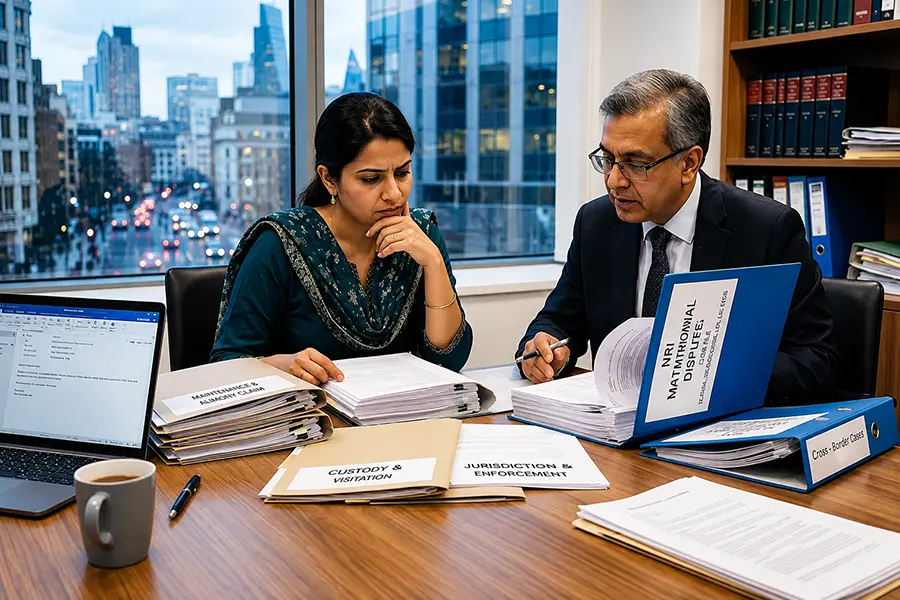
When a loved one passes away leaving property in India, the grief is often compounded for Non-Resident Indians (NRIs) by legal paperwork, distance and uncertainty. Probate is one of the most misunderstood parts of that journey. This article explains what probate is, what has recently changed, and the real-world problems NRIs may face.
What Is Probate?
Probate is a court grant that authenticates a will for legal purposes and confirms the authority of the executor named in it. It may help banks, registrars, companies and other authorities establish that the will can be acted upon.
Where there is no will, or no executor is appointed, eligible persons may need to consider Letters of Administration or other appropriate succession documents, depending on the circumstances.
Historically, probate was compulsory in certain circumstances under the Indian Succession Act, 1925, particularly in connection with specified wills and the former requirements applicable to Mumbai, Chennai and Kolkata.
A Recent Change You Should Know About
Section 213 of the Indian Succession Act, 1925 was associated with the requirement to establish rights as an executor or legatee through probate or Letters of Administration in specified circumstances.
The Repealing and Amending Act, 2025 omitted Section 213. This is an important legal development, but it does not mean probate has become irrelevant in every case. Probate may still be sought where appropriate, particularly when the will is disputed or additional assurance is required.
Institutional requirements, other applicable provisions and the facts of each estate still matter. NRIs should obtain advice on the current legal position before deciding which documents are necessary.
1. Uncertainty About Whether Probate Is Needed
Even when probate is not legally compulsory in a particular case, banks, housing societies, registrars and companies may ask for supporting documents under their applicable procedures.
NRIs can receive conflicting advice from relatives, bankers and local representatives. Confirming the requirements of the relevant authority early can help reduce avoidable delays and expenses.
2. Distance and the Need to Be Present
Court proceedings may involve petitions, affidavits, verification, notices and hearings. Travelling to India repeatedly can be expensive and disruptive for an executor living abroad.
A properly authorised Power of Attorney holder may be able to assist with permitted procedural tasks. However, personal appearance or testimony may still be required in some circumstances. The position should be confirmed with the advocate handling the matter.
3. Documentation Across Borders
Documents signed overseas, including Powers of Attorney, affidavits and consents, may require notarisation, apostille or consular attestation, as applicable. Indian stamping and other formalities may also be necessary.
Requirements depend on the document, the country where it is signed and the intended use in India. Errors in execution, attestation or stamping can cause rejection and additional expense.
4. Wills Made Abroad
A will executed overseas can raise questions about its validity, proper execution, applicable law and its effect on property situated in India.
A foreign court's grant relating to a will does not automatically resolve every issue involving Indian assets. Additional recognition or legal proceedings may be required, depending on the circumstances.
Where a will covers assets in several countries, coordinated advice from professionals familiar with the relevant jurisdictions is particularly important.
5. Proving the Will
Where a will must be proved in court, the applicable evidentiary requirements must be satisfied. Attesting witnesses may be important, and difficulties arise when witnesses have died, moved away or cannot be located.
Questions may also arise about the circumstances in which the will was prepared, the testator's capacity, the involvement of beneficiaries and the authenticity of signatures. Each case must be assessed on its evidence.
6. Family Disputes and Caveats
An interested person may object to a probate proceeding or enter a caveat where the applicable procedure permits. A matter that initially appears straightforward can then develop into contested litigation.
Disputes may involve possession of property, competing claims under different documents or disagreements between family members. Reliable local coordination and timely legal advice can help an overseas executor manage the process.
7. Delays in the Courts
Probate and succession proceedings can take time, particularly when the will is contested. Notices, publication requirements, evidence and hearing schedules may all affect the timeline.
Even uncontested matters require the prescribed procedure to be followed. NRIs should avoid relying on guaranteed completion dates and should request realistic updates from their legal representatives.
8. Court Fees and Professional Costs
Court fees and procedural costs depend on the applicable state law, the nature of the proceedings and the value of the estate where relevant. Legal fees, document preparation, translations, attestation and travel may add to the overall cost.
Before proceeding, request an itemised estimate and clarify which expenses are fixed, which are conditional and which may arise if the matter becomes contested.
9. Personal Law Differences
Succession rules can vary according to personal law, the nature of the assets and other relevant circumstances. For example, Muslim succession law includes specific rules governing testamentary dispositions.
NRIs should not assume that the same succession rules apply uniformly to every individual or estate. Qualified advice is important before distributing assets or making decisions based on a will.
10. Tax, Money and Repatriation
Inheritance can raise questions beyond succession proceedings. These may include tax consequences on a later sale of inherited property, tax deducted at source, foreign exchange compliance and the transfer of sale proceeds outside India.
India does not currently impose a general inheritance tax. However, other tax and reporting obligations may apply in India and in the country where the beneficiary resides.
Repatriation depends on applicable foreign exchange rules, the nature of the inherited asset, the source of funds and the required supporting documents. NRIs should consult qualified tax and financial professionals before transferring funds internationally.
11. Reliance on Intermediaries and Fraud Risk
NRIs often depend on local representatives to obtain records, communicate with authorities and coordinate property-related work. This can create risks of excessive charges, poor communication or fraudulent dealings.
Verify professional credentials, agree on responsibilities in writing, retain copies of filings and receipts, and independently confirm important property or financial transactions.
Practical Tips for NRIs
- Plan early: Prepare a clear will and review it when circumstances change.
- Choose a reliable executor: Consider appointing a suitable executor or co-executor who can coordinate matters in India.
- Organise records: Maintain accessible records of title deeds, bank accounts, investments and relevant identification documents.
- Complete overseas formalities: Confirm notarisation, apostille or consular attestation and Indian stamping requirements before signing documents.
- Consult qualified professionals: Obtain Indian succession and property advice, along with tax advice in your country of residence where necessary.
- Check current requirements: Confirm the law and the requirements of the relevant institution before assuming probate is necessary or unnecessary.
How MOOV INC ADVISORY Can Help
MOOV INC ADVISORY provides India-based advisory and on-ground coordination support for NRIs and overseas families dealing with property, documentation and related matters in India.
- Coordinating relevant property and succession documentation.
- Facilitating consultations with qualified advocates.
- Helping coordinate India-based follow-up and communication.
- Supporting practical coordination for India-related property matters.
Legal advice and representation should be obtained from qualified advocates. Tax, foreign exchange and overseas legal questions may require appropriately qualified professionals in the relevant jurisdiction.
Conclusion
The legal position on probate in India has changed, but NRIs may still face practical hurdles involving distance, documentation, family disputes, court delays and cross-border financial requirements.
Early planning, a properly prepared will, organised records and reliable professional support can help reduce uncertainty and make the administration of an estate more manageable.
Clear documentation, informed decisions and reliable support can help NRIs manage inheritance matters in India with greater confidence.
— MR. VIVEK KRISHAN SOODFOUNDER, MOOV INC ADVISORY
Disclaimer: This article is for general informational purposes only and does not constitute legal, tax or financial advice. Succession, probate, taxation and foreign exchange rules may vary according to applicable law and individual circumstances. Consult a qualified lawyer and tax professional before making decisions concerning a will, probate or an estate.